Articles
Viscosity Decoded: What 15W-40 Tells You
read time
29/4/2026

The viscosity grade is the most read and least understood number in lubrication. Here's what SAE and ISO grades measure, and how to choose properly.
Ask a workshop what goes in a truck and you'll hear 15W-40 before anyone asks which truck.
Most of the time that's the right answer. It was arrived at by habit rather than by reading the manual, though, so on the machines where it's wrong nobody finds out until something expensive happens.
The W isn't a temperature and isn't about winter
SAE J300 grades an engine oil on two separate sets of tests.
The number in front of the W comes from cold testing. One test measures whether the starter can turn the engine. The other measures whether the oil pump can get oil to the bearings before the bearings notice it's missing. Each grade has a temperature at which it has to pass both. A 5W flows at a lower temperature than a 15W, and that's the whole meaning of it.
The number after the W is measured at 100 degrees Celsius, with a high temperature high shear figure sitting alongside it. That one governs the film once the engine is hot and working hard.
So 15W-40 describes two points and skips everything in between. It also says nothing about whether the oil will still be a 15W-40 in six months. Nor does it say anything about performance.
Viscosity index is the part between the two numbers
Viscosity index is how much an oil thins on the way up to temperature. A standard mineral hydraulic oil sits around 95 to 100. A high viscosity index grade is well past 120, and what you get for that is a wider usable temperature window.
That's a bigger deal here than most European technical literature assumes. A loader hydraulics started at three degrees on an inland winter morning and running at eighty-five degrees by two in the afternoon is being asked to cover a spread that a temperature controlled factory in Lombardy would handle with two different oils. That's what the Arena HVI grades are for.
Industrial oils use a different scale, and it doesn't convert
ISO viscosity grades are measured at 40 degrees Celsius, not 100. An ISO VG 46 isn't an SAE 40 and there's no rule of thumb that safely gets you from one to the other. Plenty of gearboxes have been filled on the assumption that there is. Where an OEM asks for ISO VG 68, that's the number to match.
What going wrong looks like?
Too thick. More of the engine's energy goes into shearing oil than into moving the machine. Flow on start-up slows down, which is when most of the wear happens anyway. On a cold hydraulic system, oil that's too heavy will cavitate the pump at the inlet before the operator has finished his first bucket.
Too thin. The film between loaded surfaces thins until the high spots touch. Pressure bleeds across worn clearances, response goes soft, and leak paths that viscosity used to hold closed, start passing fluid. The machine feels tired and nobody can point at a fault.
Out of grade. The 15W-40 you bought can be behaving like a 15W-30 well before the drain if the viscosity modifier in it was cheap. Shear stability is a formulation property, not a grade, and an oil analysis will catch it long before the operator does.
Choosing properly
5. Start with the equipment manufacturer's requirement. It's the only source that knows the clearances, the oil pump capacity and what the after-treatment hardware will tolerate.
6. Then your ambient range, using the coldest the machine will be started at rather than the daytime average.
7. Then duty. Sustained high load, high torque at low speed and long idling all move the answer.
8. Then confirm it with oil analysis. Viscosity at 40 and 100 degrees on a used sample tells you whether the choice held up.
Where we sit
The range is built so you can match the machine instead of rounding to the nearest drum on the shelf.
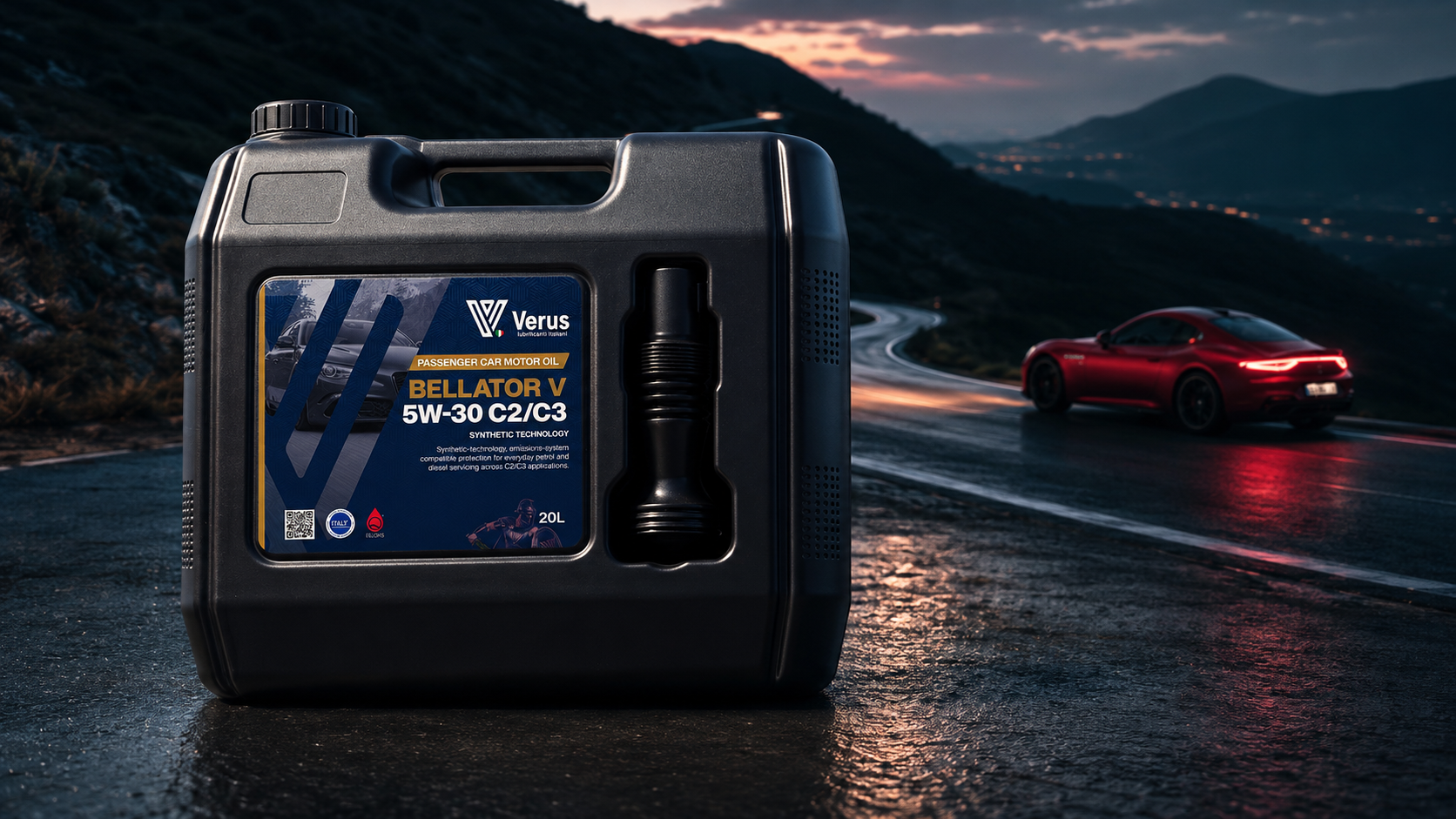
• Bellator runs 0W-20 through to 15W-40 for passenger and light commercial engines, with mid-SAPS grades where the emissions hardware needs them.
• Murmillo covers 15W-40 and 10W-40 in CK-4 and 15W-40 in CI-4, so the new trucks and the old ones in the same yard each get what they were designed for.
• Arena covers ISO VG 32, 46 and 68 as standard grades, plus HVI 46 and HVI 68 where the ambient swing is wide.
• Maxim covers UTTO 10W-30 and the TDTO grades for transmission, hydraulic and wet brake duty on tractors and earthmoving plant.
Call to action: Tell us the machine and the duty and we'll work the grade through with you.
Keep reading



Contact us
Contact us for product enquiries, technical support or partnership opportunities.