Articles
Not All Mineral Oil Is the Same
read time
28/5/2026
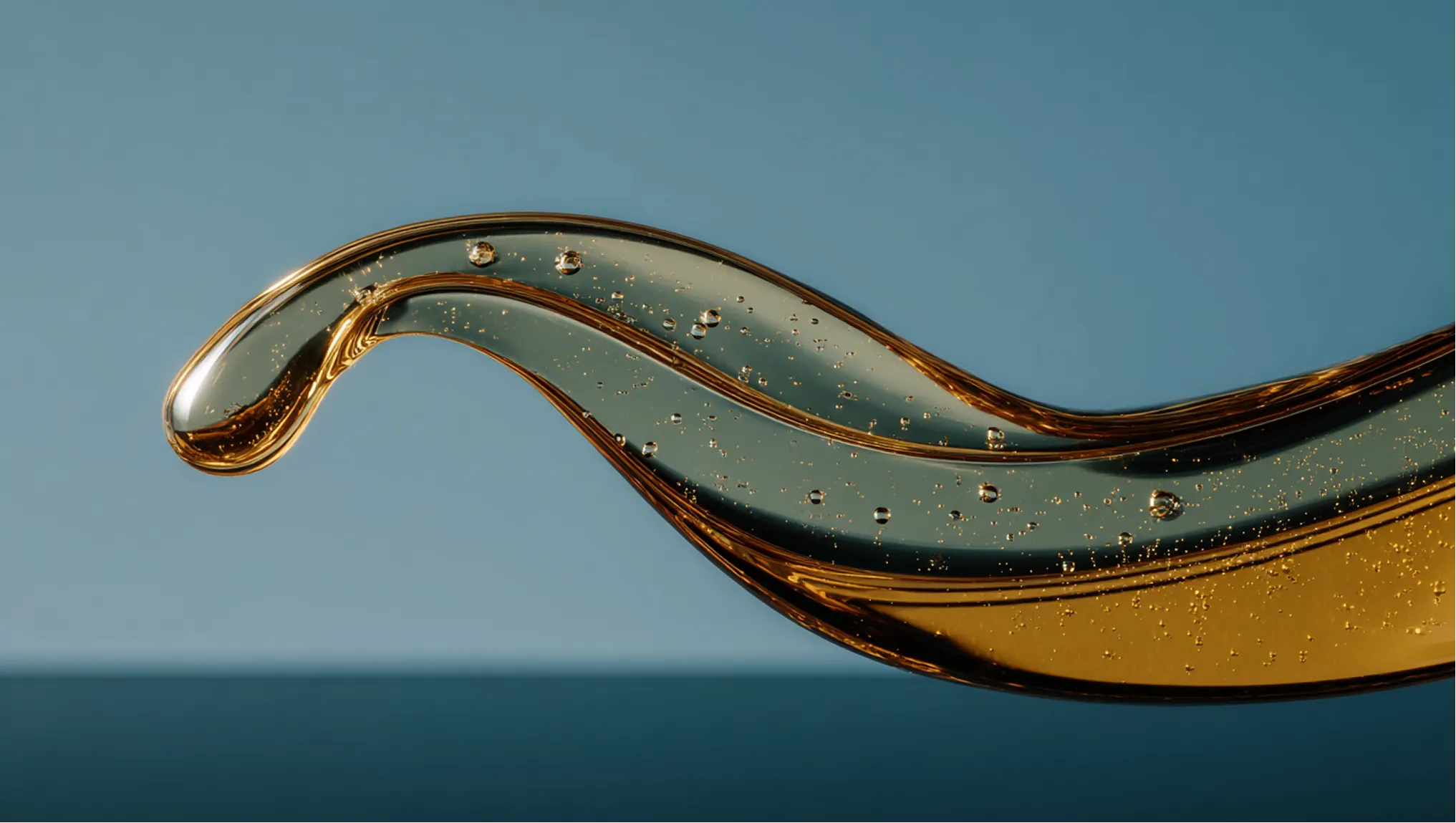
Two hydraulic oils canshare a viscosity grade and behave nothing alike. Here is what base oil groupsmean, and what changes on your machine.
Most of what you paid for isn't the additive
Ask around a workshop about what makes a hydraulic oil good and the conversation goes straight to the additive package. In a hydraulic oil the additive treat rate is a couple of per cent. The other 98 per cent is base oil. Engine oils carry more chemistry, and base oil is still around three quarters of the drum.
So you're mostly buying base oil, and base oil comes in five grades of quality. The API sorts them on three measured properties: saturates, sulphur and viscosity index.
• Group I. Solvent refined. Below 90 per cent saturates, above 0.03 per cent sulphur, viscosity index 80 to 120. The oldest route, still sold everywhere, and the cheapest thing that can honestly be called mineral oil.
• Group II. Hydrocracked and hydrotreated. At least 90 per cent saturates, no more than 0.03 per cent sulphur, viscosity index 80 to 120. The aromatics and sulphur have been converted rather than washed out, which is why the oil comes out close to water-white and stays that way in service.
• Group III. Same purity limits, viscosity index above 120. Very high oxidation resistance, low volatility, and sold as synthetic in most of the world including Australia and New Zealand.
• Group IV. Polyalphaolefin. Built rather than refined, and it shows in cold flow and thermal stability.
• Group V. Everything else. Mostly esters and polyalkylene glycols, blended in for one specific property such as solvency or seal compatibility.
Which is why "mineral" on a price list tells you nothing useful. Group I and Group II are both mineral oils, they'll both meet the same ISO viscosity grade, and they will not give you the same service life.
What the difference looks like in the machine
It oxidises sooner. Oxidation is the clock running on any oil, and Group I gets to the end of it first. If one machine's oil comes back dark and acidic at 2,000 hours and an identical machine on identical duty doesn't, base oil is one of the first places to look. Whether you can stretch the drain on the better oil is a conversation for your equipment manufacturer and your oil analysis, not something the base oil settles by itself.
It varnishes. An oxidising oil lays soft varnish down on hot metal. In a hydraulic system that film eventually reaches servo and proportional valve spools, where the clearance is a few microns. By the time a fitter is chasing an intermittent valve fault, the oil has been building that film for a couple of years.
It boils off. The light ends in a base oil evaporate at operating temperature. You top up more often, and what's left in the sump is thicker than the grade you bought. On an engine oil data sheet, the Noack volatility figure is the one reporting this.
It lessens the effectiveness of additives. Anti-wear, anti-oxidant and detergent chemistry has to stay in solution and stay active to be worth anything. A dirtier base oil inhibits additives, so the treat rate on the formulation sheet stops being the treat rate the pump sees.
How to tell what you've got
Two of the tests people reach for don't work. Viscosity index won't separate Group I from Group II, because both live in the same 80 to 120 band and an ISO 46 from either will read in the high 90s to low 100s. Colour is a hint at best, since dyes and some additive chemistry will tint an oil that's perfectly clean.
Four questions that do work:
1. What's the base oil? If the data sheet won't name a group or a refining route, you've learned something anyway.
2. What's the oxidation result? Ask for TOST (ASTM D943) or RPVOT (ASTM D2272) and compare two products in the same grade.
3. What's the sulphur content? It's the cleanest single line between Group I and Group II.
4. On an engine oil, what's the Noack? That's your consumption figure in advance.
Any supplier who can answer all four in one email is worth holding on to.
Where we sit
We publish the base oil on every product, because it belongs in the specification rather than in the small print.
• Arena hydraulic oils are formulated on Group II base stocks and meet the requirements of DIN 51524 Part 2 (HLP) and ISO 6743-4 HM.
• Murmillo runs from mineral through to full synthetic, so a mixed fleet can be matched engine by engine instead of putting one grade through everything and hoping.
• Rudis X driveline fluids sit on synthetic base stocks, where thermal stability and shift feel are doing the hard work.
Chematek has been designing and building process plant for refineries and the chemical industry since 1979. Base oil selection doesn't get taken on faith from a supplier's data sheet.
Ask us what's in the drum. Any product in the range, any time.
Keep reading


Contact us
Contact us for product enquiries, technical support or partnership opportunities.